Engraved Olive Wood Serving Boards
Every olive wood board looks different — the grain makes each piece one of a kind. Serving or cutting, how the engraving with names and a date is made, and how the wood stays good-looking for years.
Olive wood: why every piece looks different
Olive wood comes from a tree that grows slowly and anything but evenly — often over decades, with twists in the trunk and shifting growth directions. The result is a grain that runs from light yellow-brown to dark, almost black veins, with swirls and patterns that never repeat. In practice, that means two boards from the same order never look identical — that isn’t a manufacturing flaw, it’s the very quality that makes olive wood special. Anyone after flawlessly uniform furniture wood is in the wrong place with olive wood. Anyone who sees that irregularity as a value will find one of the most characterful materials worked in the shop.
Serving or cutting?
An olive wood board is usually marketed for both — serving and cutting — but once an engraving is involved, an honest distinction is worth making. An engraving is a fine but genuine groove in the wood’s surface. Cut on that surface regularly with a knife, the engraving wears down faster, and the fine grooves can trap moisture and food residue that’s harder to wipe out than on a smooth surface. The practical solution: use the engraved side for serving and arranging — cheese, antipasti, bread, food laid out for show — and use a different, unengraved part of the board, or a separate chopping board, for actual cutting. That way the engraving stays clearly legible for a long time, instead of fading after a short while.
Engraving with names and a date
Names, a date, or a short line can be laser-engraved into the olive wood pieces — the method that suits finer lettering best on an uneven, naturally grained surface. Because of the material’s strong grain, an engraving on olive wood never looks quite as “clean” as on smoother, lighter wood — that’s intentional, part of its character, not a compromise. Anyone after the clearest, most contrasted engraving should keep that in mind when choosing a motif; a plain, short text usually works better on the lively grain than a very delicate motif.
As a gift: wedding, house-warming, Christmas
The olive wood wedding boards in the “Ivy Edition” are the most developed piece in this line — a serving board with an engraved ivy motif, designed as a gift for the wedding itself; more on the page about personalised wooden wedding gifts. Alongside that, the smaller olive wood serving bowls and tapas bowls (from around €11) work well as a house-warming gift — something that gets used in the new home right away, instead of landing in a drawer — or as a smaller but still worthwhile Christmas gift, when a present shouldn’t be too big.
Care: oiling, cleaning, what olive wood doesn’t like
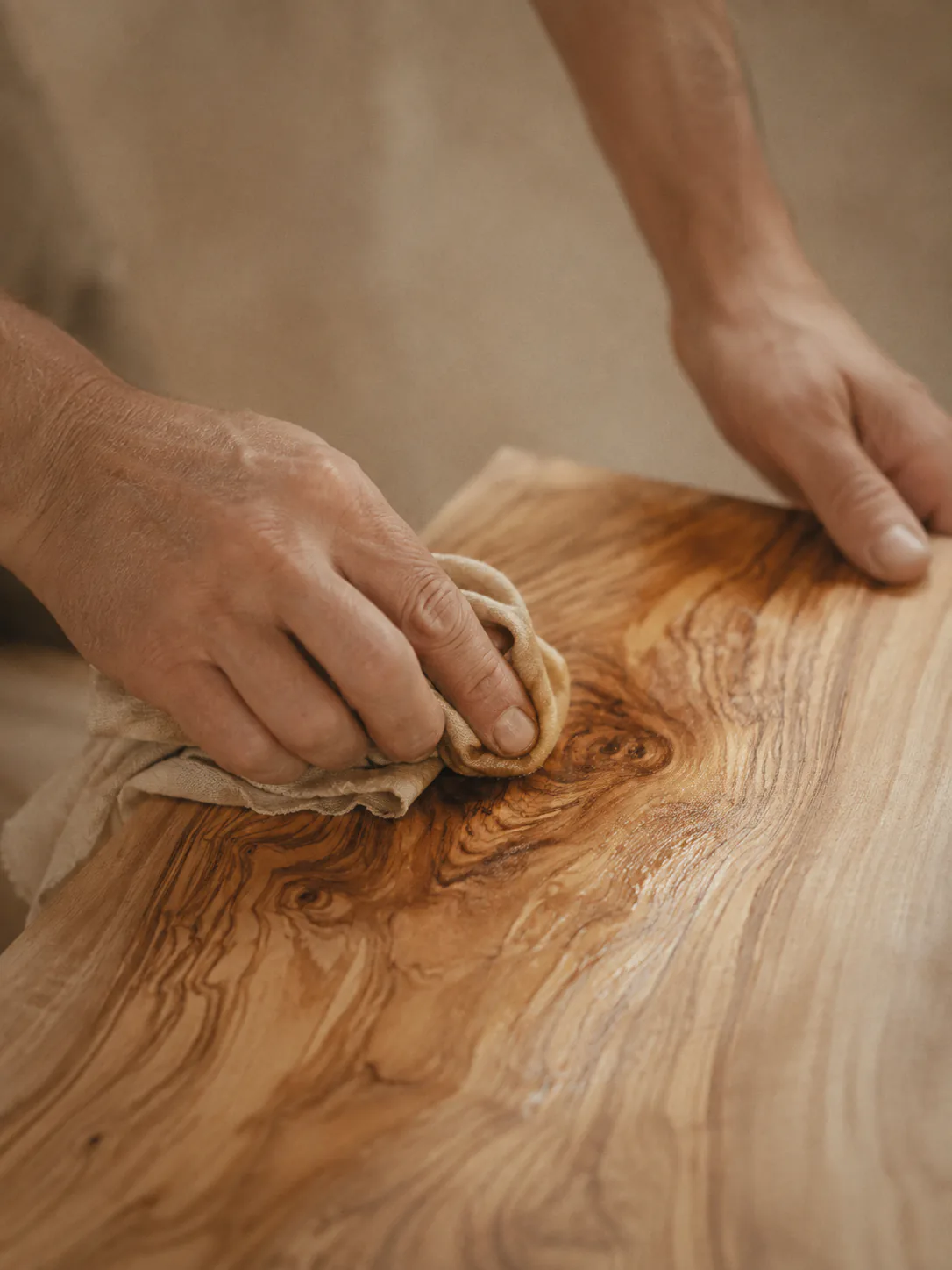
Olive wood is naturally fairly dense and oil-rich, but it still can’t take permanent damp or strong heat. After use, the best approach is washing by hand in warm water and drying it straight away, rather than letting it drip dry — standing water swells wood over time and leads to cracking. Every so often (every few weeks to months, depending on use), it’s worth a thin coat of food-safe oil — unscented linseed oil, or a dedicated food-contact wood-care oil — to keep the wood supple and stop it drying out. What olive wood doesn’t like: direct heat (a hot pan straight from the oven), the dishwasher, and lasting moisture — more on that in the FAQs below.
Sizes and shapes in the range
From the small tapas bowl (from around €11) through the rustic serving bowls to the larger “Ivy Edition” wedding board, the range covers different occasions and kitchen sizes. Because every piece is cut from a different section of the natural material, shape and exact grain vary from piece to piece — currently available sizes and shapes are on the relevant Etsy listing.
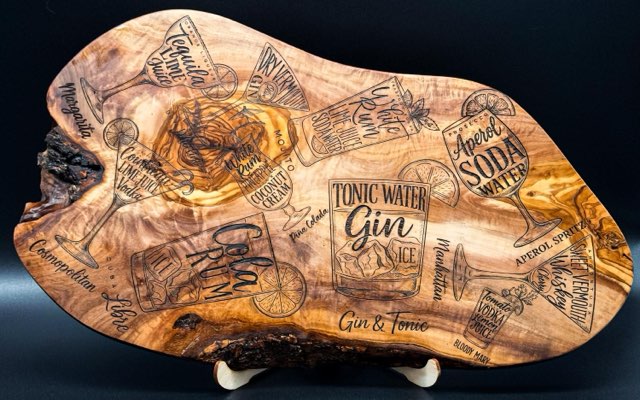
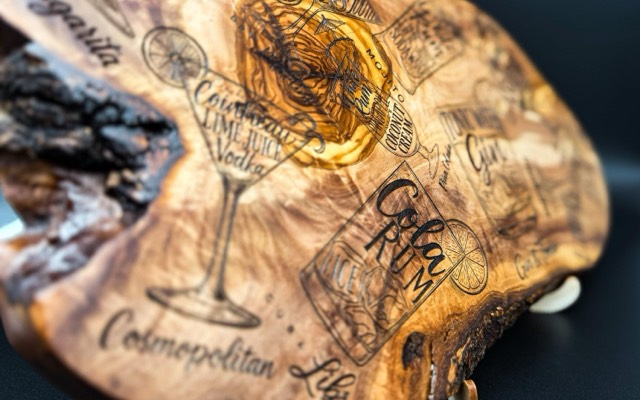
Prices come from the current Etsy listings and can change depending on size and finish — the listing itself is always what counts.
Frequently asked questions
How do you care for an olive wood board?
Clean it by hand with warm water, dry it immediately, and oil it at regular intervals with a food-safe wood oil. Lasting damp and direct heat are the most common causes of cracking and warping.
Can olive wood go in the dishwasher?
No. The combination of heat, moisture and harsher detergent residue in a dishwasher takes a real toll on solid wood — it can crack, warp or turn dull. Hand-washing is always the right choice for olive wood.
What do you oil a chopping board with?
Best with an unscented, food-safe oil — pure linseed oil, for example, or a care oil made specifically for wooden kitchen utensils. Ordinary cooking oil from the kitchen (sunflower oil, say) is less suitable, since it can turn rancid over time.
Can you cut on an engraved surface?
Possible, but not advisable. The fine grooves of an engraving wear down faster under a knife and can trap moisture and food residue. Better: use the engraved side for serving and arranging, and choose a different surface for actual cutting.
Next: Personalised Wooden Wedding Gifts · Wooden Anniversary — Gifts for Year Five
updated: august 2026
Your own wording, or a different size?
Not every combination of size, shape and engraving text is already a finished listing — just ask what’s possible.